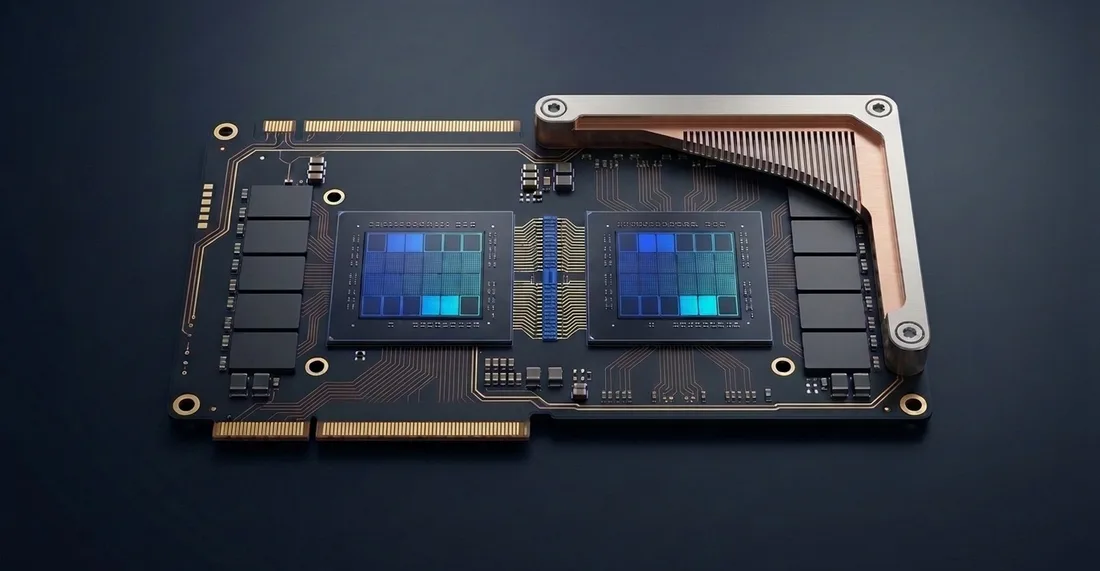
Mercury-1 is an open-source RISC-V GPU design for AI training. The repository holds runnable FP8 kernels, a functional virtual machine (MercuryVM) for a custom 32-bit Xmer* instruction set, Python simulators for thermals, cost, cycle-level memory behaviour and cluster scaling, and SystemVerilog prototypes of the arithmetic, SRAM and DMA blocks. It is a pre-silicon design. Throughput, cost and power figures come from design targets, analytical models and CPU simulations; nothing here was measured on a chip.
Inside this research
Design targets
The die, the packaging, and the 1S and 1D targets for compute, memory, power and cost.
What the simulations say, including where it loses
Accuracy, cluster scaling and cost per token, and where Mercury-1 falls behind.
What was reproduced, and what is not built
What the virtual machine and the RTL checks reproduced, and the list of what is not built.
Reproduce
Commands to run the kernels, the tests and the qualification report.
Next
Use Nova today. Or help us measure the next thing.
Nova is free to start, on the desktop and in the browser. The research is open source, and the next experiments need more compute than one GPU.